

The Increasing Importance of Continuing Professional Development (CPD) for Architects
Construction CPD as a marketing tool
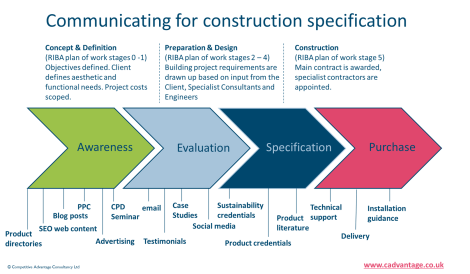
For many construction product manufacturers, developing and delivering high-quality construction CPD is key to their marketing strategy to promote products and foster relationships with specifiers.
Well-designed CPD programmes help manufacturers to impart expert knowledge and insights and build credibility with specifiers, strengthen relationships with key decision-makers and showcase technical expertise and product innovation. It can take many formats, with face-to-face or online technical seminars being two of the most popular. Manufacturers offering CPD programmes position themselves as trusted advisors and partners in construction.
The increasing importance of CPD in the construction market
CPD has an important role in today’s construction industry. Regulatory changes, particularly following the Grenfell Tower Inquiry and the introduction of the Building Safety Act 2022, have placed increased emphasis on competence and accountability with requirements for architects and other specifiers coming under the spotlight.
New Requirements from the Architects Registration Board (ARB)
Through the Building Safety Act 2022, the ARB, the independent professional regulator, now has the duty of monitoring the training and development that architects complete throughout their careers, which is done through a continuing professional development (CPD) scheme for all architects. ARB launched this new scheme in January 2024. The scheme is designed to be flexible and accessible, is outcomes focused and activities based.
The scheme has no minimum requirement for the number of hours undertaken, instead it wants architects to focus on the quality and outcome of their development activities. However, there is a recommendation architects carry out a minimum of eight construction CPD activities over the year which includes those carried out in respect of its specified mandatory topics. Mandatory topics can change annually, with the current 2024 ones being ‘Fire and Life Safety Design’ and ‘Environmental Sustainability’.
The ARB now has the authority to assess architects’ competence. As such, it will audit a percentage of architects’ CPD records for quality assurance and compliance each year. Temporary exemptions may be granted to architects who cannot complete the required construction CPD, while architects who have not met the necessary standards will have the opportunity to take corrective steps before being removed from the Register of Architects.
New Requirements from Royal Institute of British Architects (RIBA)
RIBA describes itself as a global professional membership body driving excellence in architecture. It is committed to helping members become better architects, in order to deliver better and safer buildings and places, stronger communities and a sustainable environment. Coinciding with the ARB’s updated CPD requirements, the RIBA amended its rules around CPD in January 2024, removing the requirement for members to allot points or learning levels to their CPD activities and introducing tougher compliance. The intention is to ‘ensure and demonstrate that RIBA members meet the highest professional standards and are equipped with expertise in crucial areas, such as building and fire safety, climate literacy, legal and regulatory compliance, and inclusive design’.
It continues to ask its members to undertake 35 hours of CPD annually, 20 hours of which must be against its core curriculum of 10 topics with at least half of it now having to come through structured means as opposed to informal individual learning.
The emphasis on digital reporting is a notable development. RIBA members now log activities via an online CPD tracker. This ensures transparency and facilitates compliance monitoring. Architects must also reflect on their learning, linking outcomes to professional goals.
RIBA will resume audit members’ CPD records, ensuring that each one is up to date, rather than sampling records randomly as done previously. Non-compliance under the new auditing system will result in sanctions, with members that fail to respond to RIBA requests, reminders and subsequent warnings, facing suspension and eventual expulsion.
Conclusion
Construction product manufacturers have long been seen as the provider of technical CPD by architects. In understanding the new requirements architects face in this area and tailoring their programmes accordingly will further demonstrate their knowledge and competence and position them as the trusted advisor.
If you are considering developing a CPD programme to architects or other construction specifiers and would like to discuss further please contact us.